
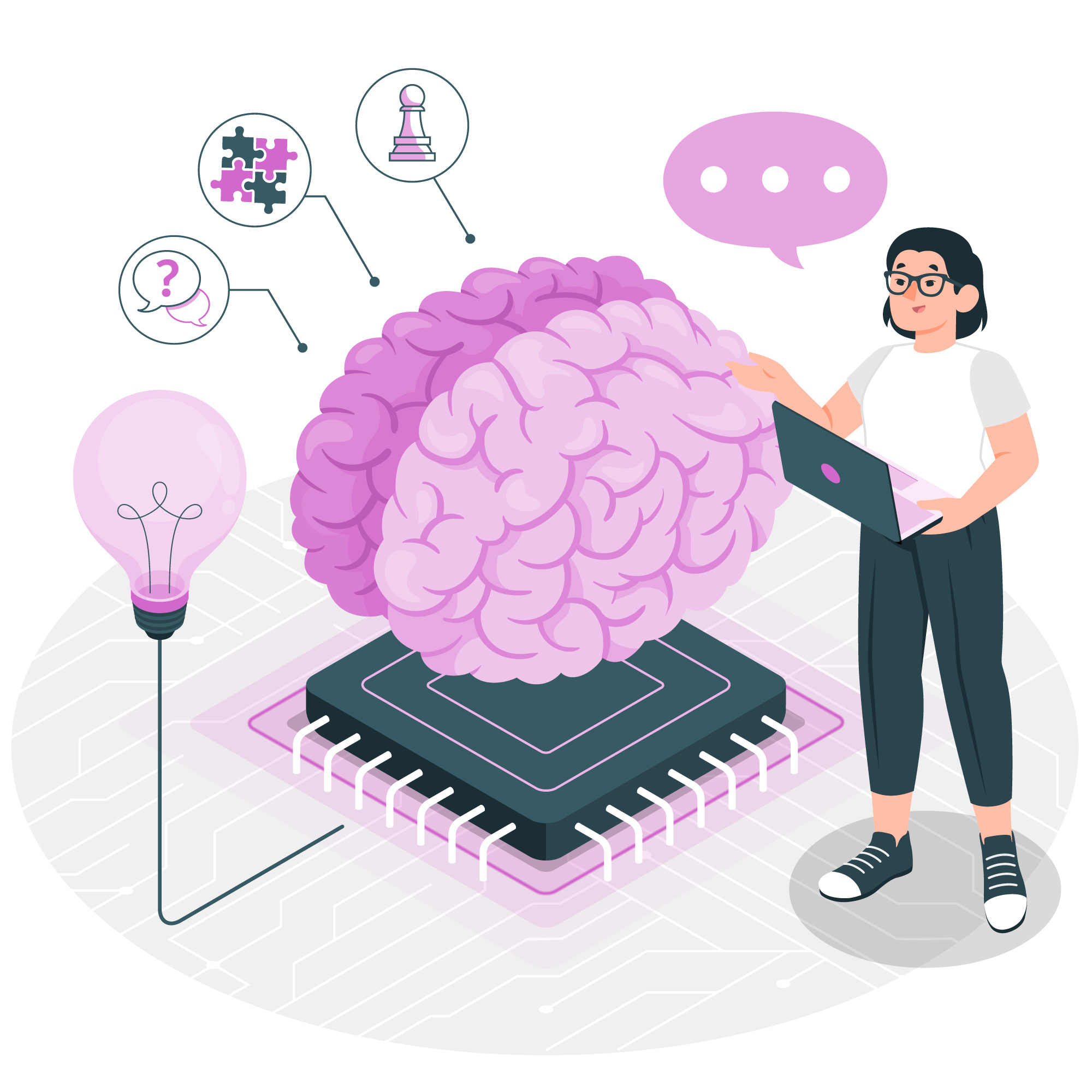
Over the years, artificial intelligence has become increasingly popular among people and, in recent months, it has gained even more prominence by becoming a part of most users’ lives. Just as in other market sectors, digital marketing has also been transformed, beginning to work in tandem with this new innovation to deliver a more accurate experience for its users. Companies that have not yet embarked on this process of adaptation risk becoming obsolete, as consumers now seek the convenience these tools offer.
Even though artificial intelligence is quite popular nowadays, many uncertainties still remain regarding the ways in which it is transforming digital marketing. With this in mind, we have prepared a comprehensive guide that outlines all the innovations this system can offer to the brands that utilise it. Have a look!
What is Artificial Intelligence?
Artificial intelligence is a branch of science that enables the development of computational systems capable of performing a wide range of tasks that were once exclusively carried out by human intelligence. It employs algorithms and data models to process information and identify various patterns, thereby allowing predictions to be made, as well as answering questions, making decisions, and creating content.
The Main Impacts of Artificial Intelligence on Digital Marketing
As mentioned earlier, artificial intelligence has become a tool used by many in their everyday lives, and this is no different for digital marketing companies. Below, we outline the primary ways in which this technology has reshaped the field:
Mass Personalisation
Artificial intelligence offers numerous benefits for companies, particularly in digital marketing, one of which is mass personalisation. Through AI, algorithms can determine the content to be shared by drawing on references from users’ behaviour and preferences, based on their online browsing. AI is capable of analysing vast amounts of data and information, enabling the creation of highly personalised campaigns—whether for advertisements, special offers, or content targeted at a specific audience.
Automation of Repetitive Tasks
Another advantage of utilising artificial intelligence is its capacity to automate repetitive tasks that consume a significant portion of employees’ time. Marketing professionals can employ such tools to perform various routine tasks, thereby automating management processes. This ensures that all campaigns and social media posts are monitored and analysed by AI, allowing professionals to dedicate more time to tasks that require creative and strategic input.
Predictive Analysis
The algorithms used by AI can greatly enhance the understanding of a company’s customers. Some iterations of AI incorporate machine learning, which enables the analysis of large datasets from diverse sources—be it websites, social media, or user comments. This technology can forecast future trends for a brand based on the behavioural responses of users, allowing companies to make more informed decisions and plan their strategies with greater precision.
Content Creation
It is now possible to harness artificial intelligence for creating content that can be posted on social media or websites. This represents a significant advantage for digital marketing firms, as the tool supports the creative process essential for attracting customers. While human creativity remains irreplaceable—so it is unwise to rely solely on AI—this technology is excellent for accelerating the content creation process.
Programme Advertising
Programme advertising utilises AI to buy and sell various types of advertising space. This technology transforms the way advertisements are presented to consumers, offering a simpler and more precise outcome. Consequently, companies can now display their ads exclusively to users who show an interest in what is being offered, based on their online behaviour.
Chatbots and Virtual Assistants
Chatbots and virtual assistants are now commonly found on numerous websites and applications, serving to interact with customers in real time. They can answer queries, provide support, and much more. With every interaction, these systems collect valuable data about the user, which can later be used to enhance engagement and ensure clearer communication. These tools are both swift and precise, improving the overall customer experience. Furthermore, they help optimise the time of support staff, who can focus on resolving more critical issues rather than screening every user.
Voice Search
Another significant change brought about by artificial intelligence in digital marketing is voice search. Already integrated into platforms such as Google and devices like Alexa and Siri, voice search offers a quick and practical means of delivering information to users. However, for this system to be effective within a company, it is essential that all website content is up-to-date and optimised to support voice-based queries.